Showing posts with label rants. Show all posts

Wednesday, 10 June 2015

I Didn't Ask


No,
I don't want your number
neither am I impressed
by your attempts to "help" me
at every opportunity
I didn't ask for it.
So don't message me later
expecting I follow up on your generous favors
and say thank you, for being such a gentleman

If I look lost,
don't take it as an invite to jump in
and try to guide me
using your baby talk
and repetitive phrases
I'm not a child
I didn't ask for this

No, 
I don't have to be super excited when I see you
because you held a door for me once or twice
and if I just happen to be
don't think it means
you got this one in the "bag."
Did it not occur to you
that I might just
have other things in my life
 to be excited about
and not you?

No,
you are not entitled to invade my personal space
without checking with me first
that arm rest you did at the door
your pathetic try at looking like a man
respect my space, boy

And don't put me in the spotlight 
when I never asked for it, either

and don't' you dare
pay for me
we just met,
did you forget?

No,
I will not let you speak over me
interrupt me
I think you've forgotten
I've got a sharp tongue, son
I'll embarrass you
and I won't hold back


It's enough
that us women must always walk on the right 
must always keep our arms close to our bodies
and our purses closer
walk in public expecting stares from strangers
sitting on sidewalks with their legs spread out
it's enough we got used to you
asking us how old we are
and if we're single
enough with your entitlement
it's enough .

Just let us be
don't tame us.

join us
or
leave us wild


Tuesday, 27 May 2014

The Stigma Surrounding "Needy" Muslims


I can only say I am frustrated, disappointed and really losing hope in humanity.

When a fellow Muslim brother or sister needs our help, we just seem to be so good and very quick to mistrust and disqualify.

"This must be a scam"
"They can go to the charities and get help"
"The Mosque can take care of them."
"I have my own bills to pay and mouths to feed."
"I gave last week."
"Why are they on the streets?"

     Rather than telling ourselves that these people are our own, or that maybe one day, we might be homeless and in need of a hand, we distance ourselves. We do not only assume we are totally sane and more dignified than the "needy", we dehumanize our own mankind. It is sick and leaves me really sad.

    We tend to automatically trust the middle class, well-dressed people while dismissing others. We mistrust over and over again. Little do we know that the mosques are not always so welcoming and ready to take in everyone. And that those charities might not always recognize everyone in need. And that when you give in charity, it is never a loss. And that when a brother or sister in Islam needs our help, we should be running to do whichever we can because it is ultimately us helping ourselves and giving us a step away from hell-fire.

'Adi bin Hatim (May Allah be pleased with him)reported:
Messenger of Allah (swt) said,

 "Everyone of you will speak to his Rabb without an interpreter between them. He will look to his right side and will see only the deeds he had previously done; he will look to his left and will see only the deeds he had previously done, and he will look in front of him and will see nothing but Fire (of Hell) before his face. So protect yourselves from Fire (of Hell), even by giving half a date- fruit (in charity)".
[Al-Bukhari and Muslim]


Why have our hearts hardened so much? Why have we become so clouded by privilege that we cannot see that our blessings are not our work, but Allah's. Why don't we see ourselves in our fellow humans?

I'm sorry. This wasn't as positive as I hoped it would be. I'm just really upset.

May Allah always keep our hearts pure and filled with noor and love ameen

Monday, 14 April 2014

We Should Be Ashamed of the Way We Treat Our Converts


    **Trigger warning**: confrontational language that may make you cringe. The intention of this entry is to make you feel uncomfortable. So if you are, don't stop reading.

     So, you're at a conference or some local mosque and a shy and nervous unfamiliar man or woman approaches the imam and says that he/she wants to convert to Islam. Suddenly, the crowds are whispering and on their toes thirsty and patiently awaiting to hear the words of the shahada come out of his/her mouth. As the imam addresses the man or woman and begins reciting the words, the prospective convert is anxiously trying his/her hardest to mumble them and is careful to do it as perfectly as possible. Everyone is on the edge of their seats. Women are smiling and some are even holding back their tears and as soon as the shahadah is done, the crowd erupts in a loud "Allahu akbar" and begins clapping. Tissues are passed around. The men quickly roam around the new convert and exchange their warmest salaams if it's a man. Women approach the woman and give hugs, congrats and some recipes for the full conversion to really take precedent in this "naive" man or woman's "new life".

     I wonder if these people take one minute to think about what happens after this ritual?

     Absolutely nothing.

     Poor man or woman. Not because they are new to the faith or anything. Heck, they could have better akhlaq and knowledge than all of us. But because of this show we put on for them. Because of this fasad we put on to lead them to believe that they might just be included in our circles.

     I wonder if us Muslims ever once think of what the newly converted brother and sister faces after that event? Have we thought of what it's like to have to face family with this new faith? And not just any faith, a faith that is to most seen as a "cult for terrorists". A faith that is termed by some non-Muslims as "satanic" at times among other horrible associations. In these families, the convert quickly realizes that they have chosen to alienate themselves within their own families. They may have to deal with having to hide their prayers, hide their higab, hide their Quran and even conceal their Muslim friends in some cases. So, naturally what happens then? As humans, we look towards family or support elsewhere and try to replace them with people who might accept us. Perhaps not completely replace them, depending on the situation, but the convert inevitably looks for a safe space.

     Now, where do you think the convert will go?

     To that fantasy we created. He or she will indefinitely go back to that mosque. But what will they find there?

     Rejection.

     Everyone is too busy. We might give him or her some sources, books, a Quran. But do we really believe that that is what they are looking for? We are in the age of mass communication. Information is cheap and can be found everywhere. They look for a home and help. An avenue and a place to feel needed and accepted. But instead they are met with "busy" Muslims who appear to care but are no where to be seen when real help and action is needed. All they wanted was a listening ear and a helping hand. Instead, they find themselves alienated further within this new faith, facing discrimination within and outside their communities. The Muslims are too busy coming together on the basis of race and ethnicity, they forgot the converts among them. They might have been invited to a dinner or some event, but were they really included in conversation? or did everyone speak in their foreign tongue and then proceed to providing fake apologies met with more alienation?

I have a serious problem with the word "convert". I prefer to say so and so "embraced" Islam. The word convert has connotations that are very difficult to live by. It means, "now, be like us." It does not mean, "welcome to our faith" or "let's get to know one another." As soon as the new Muslim makes that shahadah, they are told by countless other older Muslims to "make up" all of the prayers they've missed, wear higab and do multiple deeds which are probably neglected by those people themselves. I found it beautiful when a Sheikh once told a new Muslim to make dua for him. It was a sweet way of saying "we are equals and your dua is just as valid as mine".

     The saddest part is when those who embraced Islam decide to consider leaving it. And it's not because of the faith itself, but because of our treatment.

     My fellow Muslims, do not look down on each other. Do not forget who guided you and who made you born a Muslim. Teach Islam in the softest way you can. Leave the rest to Allah.

Tuesday, 25 February 2014

Why We Need to Reconstruct the Way We Do "Dawah" in Universities


      What pops in your head when you hear the word "dawah"?

      You might picture a bearded man or a lady donning the higab with qurans and brochures in their hands, standing somewhere on a university campus or in a busy street, engaging in heavy debates with random non-Muslims. You might have even heard yourself of a few "success" stories that pushed that Robert or this Jane to convert to Islam. It's all fairy dust and rainbows in the world of "dawah."

      Before I get into why I think we need to reinvent and reshape the way we perceive dawah, let me clarify some things. When I refer to "dawah" I am referring specifically to the full discourse and images of the da'ees that comes with what an average non-Muslim and Muslim not working closely with Muslim organizations sees. And as much as we would like to assume that dawah is just for education and awareness, the convert stories are the only measure of success and the only true reinforcement for someone who's been hard at work doing dawah for a long time. It's much easier to say that guidance comes from Allah then to practice it. And by practicing it, I mean letting people reach their own conclusions and not letting our implicit motivations to "guide" them to conversion be the end goal. I do not mean to belittle the hard work of those who stand for hours on end to preach a good word. But I've got to be honest, it just looks bad on us Muslims and frankly doesn't represent my notion of what Islamic dawah should be.

    I will explain myself.


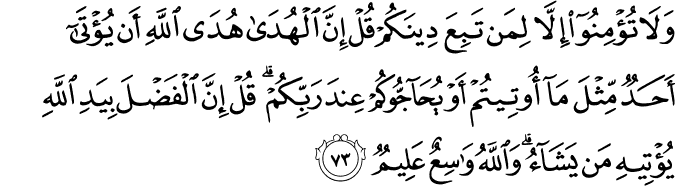
3:73

      "And do not trust except those who follow your religion." Say, "Indeed, the [true] guidance is the guidance of Allah . [Do you fear] lest someone be given [knowledge] like you were given or that they would [thereby] argue with you before your Lord?" Say, "Indeed, [all] bounty is in the hand of Allah - He grants it to whom He wills. And Allah is all-Encompassing and Wise."[Al-Imran: 73]


      We are living in a new era of jahilliyah (ignorance) where the concept of God and religion is not the mainstream and it is certainly not the accepted or the norm. Nowadays, atheists who consider themselves intellectual have taken to new deities as the Arabs before Islam before did, but instead of idols they have taken science as their religion. This new scientific religion will not tolerate anyone who chooses to make any claim without referencing it appropriately (and not with Quranic verses either). This religion does not accommodate for other beliefs. So when a Muslim who looks visibly so, approaches a random stranger with this belief, what you've got is endless arguments and despite the few success stories we hear, is ultimately a waste of valuable and precious time. And it is not me who gave time it's value. Our religion teaches us so:


103:2


"Indeed, mankind is in loss" [Surat Al-Asr:2]

     When a non-Muslim sees a Muslim and a stranger arguing passionately about religion, those with the atheist mindset will affirm their beliefs that religion is the cause of all of the problems and lack of peace in the world. I believe a Muslim should remain dignified and not put themselves out for display in public settings where it is not the right time and place to enforce ideas upon people. Add to that, if you've ever campaigned for anything, regardless if it was controversial, you've probably seen and felt first hand what it's like to be turned down by rude strangers. Why should a Muslim subject themselves willingly to this kind of treatment? Especially when a more dignified one is available.

     During the early days of Islam, the prophet Muhammad (pbuh) was forced to make his religion secret because of the small number of Muslims that existed and the risk that it imposed on them. Surely today, we don't have as much of a risk imposed on us but as minority members living in a mostly non-Muslim society, we must also show care and be intelligent in which spaces and at what time we decide to go public with matters that may harm us. Sometimes, its unavoidable. But when it is, it's safe to say that a Muslim should keep their own standing in mind and the society at large as well. I may be challenged on this one and I welcome differences of opinion.

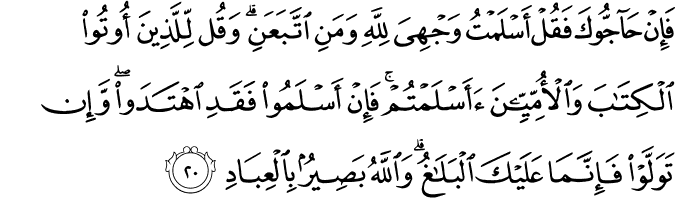
3:20

      "So if they argue with you, say, "I have submitted myself to Allah [in Islam], and [so have] those who follow me." And say to those who were given the Scripture and [to] the unlearned, "Have you submitted yourselves?" And if they submit [in Islam], they are rightly guided; but if they turn away - then upon you is only the [duty of] notification. And Allah is Seeing of [His] servants." [Al-Imran:20]

     So in the spirit of saving our time, energy and for becoming stronger Muslims, we should consider other options that raise awareness and answer the questions that people might have of Islam, but in a more efficient way.  And for that, I suggest integration.

     Not assimilation. Not blind acculturation of mainstream society, but integration. 

      University clubs for Muslims should make their dawah committees meet every week to do visible acts that define our Islam within their larger context. For example, a trip to the food bank or the local school. We need initiatives that make the Muslim woman or man a represented member in student unions at large and on the round table of any major meeting that may concern them. We should not allow others to dictate who we are and decide what works and what does not for Muslims. We must choose to break stereotypes and teach people about Islam by being Muslims with Islam on our sleeves. I don't mean integrating while denying our Muslim identities, but integrating with full acceptance of ourselves and pride in our Islam. Such that, it becomes itself one of the main topics of discussion. We need proud Muslims to be at the important dignified places and to speak for themselves. We need Muslims working alongside non-Muslims for things they have in common besides religion. And there should would be no worry about whether religion might be brought up, cause if you're a visible enough of a Muslim that's established a level of comfort with a non-Muslim, they'll ask you themselves. And sometimes they won't ask, they might see your outwardly behavior and retract the questions and beliefs they had in mind earlier. To me, that is the best dawah that could be done.

      Think, what would the Prophet (pbuh) do?


What do you think is the best way to do dawah? Do you agree or disagree?


Wednesday, 19 February 2014

Celebrity Crushes: Political Figures, Artists, and Advocates


        I find it hard to believe that there could be anyone out there that has never had a celebrity crush. Whether it was or is a television character, political leader or artist, we can all relate to having those fantasies of catching the attention of our crush for even just a few seconds. I wonder what makes the presence of these individuals so coveted? And as Muslims, how should we perceive and treat people of this status?

      We are all too familiar with what happens to people when they meet a celebrity in person. Suddenly, everyone is desperate to snap a photo and explain why they are their biggest fan. Then a quick upload on their favorite social network to brag to friends with a caption that glorifies the individual as though meeting them was the highlight of their life. If we are one of the "lucky" ones to have spent a few minutes more than the usual passerby, we desperately seek their approval and/or attention. If it's an artist, women flaunt and attempt to dress to impress. If it's a political figure, suddenly the brother wants to discuss all his aspirations. And the saddest of cases is the reality of social justice advocates and religious leaders whose popularity for everything besides their message is abused by young women and men alike. If it's a man whose catching the eye of the public for his advocacy and hard work, suddenly all that women are concerned about is his relationship status. And God forbid if he's married, then his wife better be ready for some serious aunty-like scrutiny and judgement. And if it's a woman, you can be sure that there was very few men contemplating about what came out of her mouth.

     People who are privileged to reach fame are also privileged to receive thousands, if not, millions of fans who support them wholeheartedly and would give up whatever it took for a chance to meet and greet them. They are also privileged to enjoy the support of these strangers in an almost blind fashion. These fans come to associate with these figures very strongly. So strongly that they cannot fathom seeing them commit a mistake in the public eye and some would even discredit and purposefully neglect evidence of their real humanity if they were presented with it.

      At this point, these individuals are no longer human. They have reached the status of idols and deities.

     Wait a second, that's extreme thinking, isn't it? I mean we don't obsess that much, right?

      Think about this; how much of your day do you usually spend praying? Let's say five minutes times five for each prayer, and then a few minutes here and there for some reflection or possibly some dua. The ritual of  a die-hard fan that continuously seeks to catch the attention of his idol and receives updates of his/her life through whatever medium it may be is unbelievably time consuming. So much so that it can be in itself exhibited as religious behavior all on it's own that is embedded in strong beliefs and rituals. Watching a video of an interview, tweeting them, reading an article here and there, browsing their pics, and listening to their music is bound to be more than the time spent on prayer and worship. 

     But why does this happen? What maintains and motivates this behavior?

    Popular figures work hard to reach mass audiences. One of the ways they are successful in doing so is when they provide the world with an illusion of their connection to their viewers.  Celebrities in particular are demanded by their agents to do and say multiple things that lure the public into believing that they are just like them. They do this through signings, VIP passes, interviews and other means.To look up to someone for their good work is one thing, but to let the obsession with that individual on a personal level cloud the real nature of the message they are trying to send is something else entirely.

     A Muslim must be wary of the value of their time. He or she should ask themselves an important question when they are about to engage in matters that do not benefit nor harm them; and that is, "what is the purpose of this?" If I go to his/her concert for example, what am I doing besides listening to music I could be listening to at home? Is the money put on this trip really put to use in a way Allah might be pleased with? Is all this information I'm gathering on who dated whom and who wore what beneficial to my existence in this life and the thereafter in any way?

     A Muslim must also be wary of what he or she stores in their thinking space. What we let get processed in or minds becomes who we are. Instead of filling that space with creative ideas and positive messages, it becomes encrypted with unrealistic fantasies that only distract from the reality at hand. With time, the fantasies take over and become life itself. Then the person is left unfulfilled and wondering what their real purpose in life was in the first place.

     But another question begs itself. What differentiates these individuals from people working hard to deliver the same messages but who are not under the radar?

   Purpose-wise, nothing. It's just fame and status that is coveted here. You might even know yourself of someone who started out small and didn't receive any attention and now is gaining popularity and suddenly you're letting the world know how close you were. 

     How do we then eliminating the idolization of these figures? What if they happen to be an advocate of some sort? Do I stop associating with them as a whole?

    No. All one needs to do is begin adopting a new philosophy and outlook on people as a whole. Everyone is human and should be treated equally regardless of the status they have within society. If they are advocates you are fond of, make sincere dua for them and for yourself to reach a similar positive impact on people. When you meet them, put your camera phones aside and fight the temptation to engage with them unnecessarily and for the mere selfish desire to gain attention and bragging rights. Also, think of their own struggles as people watched by many who are constantly under scrutiny and who are recipients of harsh criticism. Some cannot be seen in public without swarms of people invading their privacy and writing columns about them. Others have families that have also been dragged into the public eye. There's a lot more to being famous than it seems. And if they're a Muslim, they are then under a bigger responsibility and higher expectations to represent Islam well and speak truth regardless of their perceived level of religiosity.

    Realize that you may never meet these people. Realize that they may never be more than a stranger to you and that is okay. A Muslim does not wait on anything from the creations of Allah.

      So, be realistic, have taqwa and remember the One who helped these people reach where they are now. Remember that no matter how awesome these people seem  and how down to earth and accessible they may be, that Allah is even more accessible and that pleasing Him will be a reward for you in this life and the hereafter. He's the real celebrity you should be striving to get the attention of.

Monday, 20 January 2014

Invisible Relationships: Why Playing a Double Life Will Get You Nowhere


      Yes, I am aware this is "Random Rants of a Muslima" and I haven't been as angry as I should be. So here goes.

      This entry is dedicated to all my brothers and sisters playing "the game". To all the brothers who are "just looking for a wife". And to my sisters who think they're "just friends."


      Dear beloved young brothers and sisters in Islam,


  You're youthful. Energetic. Full of pent up emotions and passion waiting to be disposed of. That is perfectly normal. I will not dictate how you should run the course of your life. But I just want to let you know that your actions won't be hidden from view much longer. I write with the intent to expose those of you who have slipped into the habit of having what I like to call "invisible relationships". Yes, I am talking about that on-the-side fella or lady whom you've found a safe haven with. So while you spend your free time entertaining this questionable relationship with the opposite gender, under whatever excuse you've sold yourself of "were just friends" and that "she doesn't respect herself anyway" and the sort, you've really only fooled yourselves into believing that you're guaranteed a shield between you and Allah. 

     Wait, that's not you, right? I must be talking about some other people on the other side of the world or something.

    Why? Because you pray five times a day and constantly hammer your online networks with Islamic reminders? That Facebook wall, twitter, instagram, whatsapp and wherever else you work full-time to deliver your perfect image. More spaces to connect with "potentials", am I right?

  Between monitoring all your accounts and sucking in all the celebrity love, the private messages and chats have become a place of comfort and familiarity. Entertaining a single or multiple online relationships must be difficult to maneuver, I bet. Especially when they suck up so much of your free time. The attention must do wonders, right? And don't take me for a fool, when you send a "I like how you shared that hadeeth", no one is oblivious to your unstated intentions. Just drop whatever excuse you've convinced yourself of now. Because what is right doesn't need an excuse.

"It is not righteousness to enter houses from the back, but righteousness is [in] one who fears Allah. And enter houses from their doors. And fear Allah that you may succeed." [Albaqara:189]

   When's the last time you checked your heart? All of this time you've spent concerned with other people and managing these invisible relationships has drained your energy and you've lost focus of what really counts. Bottom line is, trying to blaze two paths is exhausting. It is not only tiresome but it distracts from Allah's worship. If everyday you have to feel that you're at risk of slipping from your deen, then you've made the journey harder for yourself. You've got no one to blame but your indecisiveness. My advice to you is to take a hard look at your life and evaluate where your standards stand. Are they flexible or are they as certain and solid as Allah's book? 

     Young one, nobody said that being a Muslim was easy. But there is no downtime for a pious Muslim. Do whatever it takes to keep to your standards. Get creative, distract yourself, indulge in causes, and keep temptations away from all your senses if that's what works. But, do not allow yourself to witness your own hands and eyes commit wrong and choose to be stubborn against Allah's orders.

"And let those who do not find the means to marry keep chaste until Allah makes them free from want out of His grace." [Al-Nur:33]

Ps. Anyone who thinks of themselves as "single and ready" to mingle can go find those like him. That's enough toiling with our chaste sisters and brothers.

If you want to read more, try one of our top articles: "Sister's Speak: A Muslima's Common Boy Problems" and part 2 of it as well!

Wednesday, 4 December 2013

Internalized Racism; An Invisible Dilemma


"That's not a job for Muslims."
"They'll never let you make it big."
"Better not mention your religion."


     Statements like the above are too common to mention in Muslim communities in the West where Islam is not the majority. We're confronted too many times with the phenomenon of the glass ceiling that we can't break because of our identity. "Hope - but don't overdo it" is the motto. We are all told to confine to careers and aspirations that are synonymous to the ones of others who are like "us." Well, I am frankly sick and tired of hearing this talk. 

   The other day, while I was explaining my future aspirations with a few friends of mine, I received a reaction I could not have anticipated. After explaining my aspirations for my future as a contributor to a specific field as a Muslim woman, I was met with still faces and a sense of pity fell in the room. "Poor girl", they must have thought; "she's going to have a hard time adjusting to the real world." They then began explaining to me the following:


  • There are people out there who don't want Muslims to succeed.
  • You will face challenges being a Muslim woman.
  • Be careful not to speak so openly about your identity.
  • Don't lie on your job interviews and applications, just omit anything to do with your religious affiliation. 
  • They're curious about Muslims cause they want to monopolize that information according to their own agendas.
Who's "they"? I kept asking myself.


     I can only say that I was genuinely shocked; not at the arguments themselves but at the passionate way in which they were posed as the hardcore truth of everything. Have we forgotten the ways in which the Prophet (pbuh) spread the word of Islam in the days of ignorance? Islam is our lifestyle and everything we do is stamped with our manners derived from the prophet's ways (pbuh). What kind of Ummah would we be if we denied the existence of our Deen within our societies? I can only imagine that we would become conflicted and anxious folk who lack the confidence to stand confidently on their own feet. If we don't embrace our identities, then who's going to do so for us? If I was going to get any job or opportunity by pretending to be something I'm not, then I would rather not do anything at all. What's the point of spending a lifetime trying to make money and to stay uncontroversial and safe if we don't contribute to the bettering of the ummah?  How selfish and individualistic would we be then?

   As you can guess, I had my own refuting arguments to pose. This internalized racism is the biggest barrier we face as Muslims trying to break out of our shell. We tell ourselves we can't; so we don't try. And here's another reality, most of us are of visible minority status; meaning that there's really no way to hide our identities. Denying our true selves is not moving us forward in any way or granting us the privilege of the majority. So while you're an outcast out there in the world, just own it and stand up a little taller for us all, will you?

    Here in the US, there's no denying racism exists. It's everywhere and in many forms; from direct aggression to micro-aggression to exclusion and neglect. But we must never let that be the norm. Our opposing stance to this normalization of racism must begin first and foremost from our hearts. When we choose to not accept this treatment with our actions before our words, we become a proud ummah with valued teachings to pass down to the upcoming Muslim generations that will continue to populate this land in the future. There's no excuse for doing otherwise. If you think you've had it bad, just remember the prophet (pbuh) and his companions who've endured torture and death punishments for their deen. They were only accepted into society when they chose to stick by their identities in the harshest of circumstances.

     I'd like to say to conclude this post that I really hope we begin to challenge these ideas of racism head on within ourselves and with the world. Always be optimistic and keep your eye open for refuting evidence to any ideas you may have of where individuals as Muslims should be in society. Choose not to accept racism -internal or external- and live life a proud Muslim whose identity stays firm and grounded.

Subscribe to Random Rants of a Muslima to receive entries directly into your inbox. Click the third right hand option to be added to the mail list


Thursday, 14 November 2013

Single Muslims Speak: Annoying Things Newly Engaged Couples Do

      Congratulations newly engaged friends!

      Contrary to what you may believe, we are genuinely happy to see you've found the one for you. That being said, you still get annoying. Here's some insight from the single folk on what they would like to say to you but never did.


      Single People Speak: Annoying Things Newly Engaged Couples Do:


1. Flooding their timeline with every pose imaginable- or borderline halal.


2. A picture with their hands on top of one another, displaying their rings.


3. Trying to hitch you. Cause they want you to feel the same way they do. They'll do it at their own wedding if they have to.


4. Flashing that ring and waiting for your face to be very excited.


5. Wearing matching shirts on Facebook. Same shirt, just different pictures.


6. They work out together. The world must know.


7. They wanna interfere with your love life or lacktherof.


8. Posting marriage and "half your deen" quotes on Facebook.


9. Giving you the "one day you'll find a great person" talk.


10. Hashtags #marriagelife or #engagedlife or #inlove .


11. Cropped and photoshopped images of their names together with pictures of roses and chocolates.


12. No more quality girlfriend/bro time.


13. Planning their wedding with you.


14. Facebook knew about your BF's engagement before you did.


15. Your congratulations is met with "hopefully for you too".


16. Quitting schooling to fly off into nowhereland.


17. Asking you for advice on their motherinlaw.


18. Being late for their own engagement.


19. The evil eye is suddenly everywhere.


20. Taking this list too seriously.


:)


Subscribe to Random Rants of a Muslima to receive entries directly into your inbox. Click the third right hand option to be added to the mail list.

Tuesday, 10 September 2013

Why Calling Someone "Religious" is Problematic


  We've all used it before; the sacred "R" word.

   Used to classify people into two broad groups, depending on the intention and whom we are speaking to; and is almost never used when we are talking about someone similar to ourselves. One group comprises the holy sheikh(a) or imaam imagery - with a beard or higab, modest apparel and their constant reminders of the deen to others. This group is seen as "practicing" and can be associated with positive adjectives to describe them as guiding angels whom we would like to consider the sisters "like our mothers" and so forth. Some of us look up to them and see them as untouched beings with a raised status to an unattainable position; whereby no matter how hard we work on becoming close to these folks in character, we are bound to fail because of their years of experience and knowledge in Islam and our deterministic past and shameful history, not to mention the way they can dare to dress differently and own it.

     And then there's a slightly different association; one that involves themes of rigidity, bigotry, extremism and savagery. This can be seen in the most subtle of ways and will not be expressed directly by the user. This association is made by some who perceive themselves of those who highly value science and technology and the advancement of culture and cannot fathom or accept the merging of religion and modernity. These are not atheist per se, but those who see religion as a flexible and practical belief, rather than a solid book of basic standards. These same folk may consider themselves to be the "right" Muslims and with that belief they placed an imaginary line between them and other Muslims whom they believe do not fit their category. This is unrelated to sects in Islam, but I mean to shed light on our hidden intentions of our use of the word "religious" to describe somebody.

     Now, what is the problem with these associations if they are correct, you may ask? Well, the first issue is our cocky confidence in that they are. Our inability to relinquish control over the boxes which we've placed other people in leads ourselves to become the opposite of what we preach for others to avoid becoming; rigid and downright judgmental. We become extremely confident of our judgement - so much so we cannot accept a member we've placed in one category to fit into another. If a "moderate" Muslim begins wearing the higab or donning a beard, they are not being themselves, and we see them as being hypocrites; all while we watch them and remain stationary - having full satisfaction that the way we perceive our religion is the most righteous. On the other hand, when we look up to a person for their Deen, we forgive their mistakes more easily - or scrutinize and analyze them - and we grant them bigger and better opportunities at being leaders of the faith in our communities; all while forgetting ourselves and widening the gap between us and themselves. We must remember that Islam has only truly taken form in a person in the case of the prophet muhammed (peace be upon him); when we label others as "religious", we let them become our ambassadors of Islam and therefore their shortcomings can become an excuse for some to stay away from bettering their deen. They say:"look at what religion does, how can I follow in their footsteps?" We must never compare our deen to others and we must look upon our character as a constant work in progress. If Allah (swt) can forgive the biggest of sins, then why don't we begin by forgiving ourselves and following through and believing His promise? Ultimately, we will be judged by Allah (swt) in front of all His creations for our true actions and intentions, so look forward to that and don't hesitate to make those changes in your life to please Him and Him only.

     When we judge others for what we perceive is in their hearts, we hand over control and omniscience to ourselves and not our Lord- an illusion of it that is. We are indirectly expressing to Allah (swt) that we are just as capable or even more so than Him -istagfarallah- at figuring people out. We've also indirectly stated to the world how much of our time  is spent thinking about the business of others rather than our own selves. For wallahi, if each of us was to carry on looking inwards instead of out at others, we would find no time and no energy to place on anyone but ourselves. Keeping a critical eye and mind on others is also keeping a critical eye and mind away from ourselves. 

     Shirk is often seen as polytheism and nothing more. Yet, we fail to realize that our ego can oftentimes be worshiped and followed as a deity and perceived in the same manner. We must always practice modesty, humility and self-reflection in order to improve our deen. If you feel comfortable comparing yourself to the prophet Muhammed (peace be upon him) in character, then go ahead and judge others. But you won't be I'm sure; and even the prophet (peace be upon him) himself told us to leave judging the contents of other's hearts to Allah (swt) and even in situations where he knew the ill intentions of those in front of him (from Allah), he was asked to be fair and to treat them based on their outwardly manner.

      Abu Ma'bad al-Miqdad ibn al-Aswad said, "I asked the Messenger of Allah, may Allah bless him and grant him peace, 'What do you think if I meet a man of the unbelievers and we fight and he strikes one of my hands with his sword and cuts it off and then takes shelter from me behind a tree and says, "I have surrendered to Allah." Should I kill him, Messenger of Allah, after he has said that?' He said, 'Do not kill him.' I said, 'Messenger of Allah, he cut off one of my hands and then said it after he cut it off!' He said, 'Do not kill him. If you kill him, then he is in the position you were in before you killed him and you are in the position he was in before he said the words he said.'" [Agreed upon]

     Usama ibn Zayd said, "The Messenger of Allah, may Allah bless him and grant him peace, sent us to al-Huraqa, a sub-tribe of Juhayna, and we came upon the people in the morning at their springs. A man of the Ansar and I overtook one of their men. When we descended on him, he said, 'There is no god but Allah.' The Ansari held back from him, but I stabbed him with my spear until I had killed him. When we arrived in Madina, that reached the Prophet and he said, 'O Usama, did you kill him after he had said, "There is no god but Allah"?' I said, 'Messenger of Allah, he was only trying to save himself.' He said, 'Did you kill him after he had said, "There is no god but Allah"?' He continued to repeat it to me until I wished that I had not become Muslim until that day." [Agreed upon]

     In one variant, "The Messenger of Allah, may Allah bless him and grant him peace, said, 'Did he say, "There is no god but Allah" and yet you still killed him?' I said, 'Messenger of Allah, he only said it out of fear of our weapons.' He said, 'Did you then split open his heart so that you know whether he truly meant it when he said it or not?' He continued to repeat it until I wished that I had only become Muslim on that day." [Agreed upom]

   Another valuable source to gain insight on judgement of character are the Sahabas (RA) whom after the passing of the prophet (peace be upon him), were left with no indication of the intentions of others from Allah. To understand the way they lived their days sheds light on the manner in which they were harsh on themselves and their own intentions first and foremost, and how they struggled to match up to the prophet (peace be upon him). If his companions struggled, then how are we so comfortable?

'Abdullah ibn 'Utba ibn Mas'ud reported that he heard 'Umar ibn al-Khattab say, "Some people were dealt with by the revelation in the time of the Messenger of Allah, may Allah bless him and grant him peace. The revelation has ceased. Now we deal with you according to what is clear to us from your actions. If anyone shows us good, we trust him and honour him. We know nothing of his inward. Allah will call him to reckoning in respect of his inward. If anyone shows us evil, we do not trust him and do not believe him, even if he says that his inward is good." [al-Bukhari]


   During the prophet's (peace be upon him) time, there was one man who used to appear drunk to the public in the daytime and the companions at one point wanted to issue him a punishment. The prophet (peace be upon him) addressed them and said "Do not curse him, for I swear by Allah, if you only knew just how very much indeed he loves Allah and His Messenger." 


He then added:
"Do not help Satan against your brother."(Al-Bukhari)

Click here to subscribe to Random Rants and be the first to receive new entries via e-mail!